







































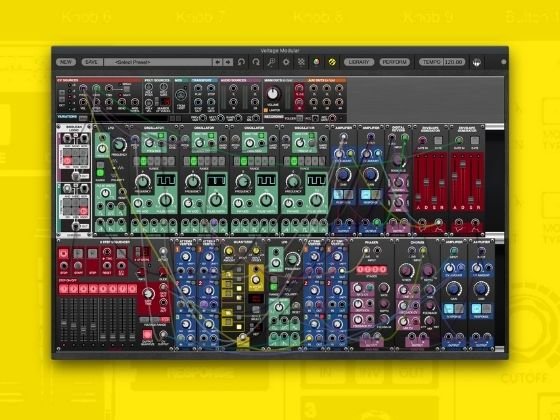
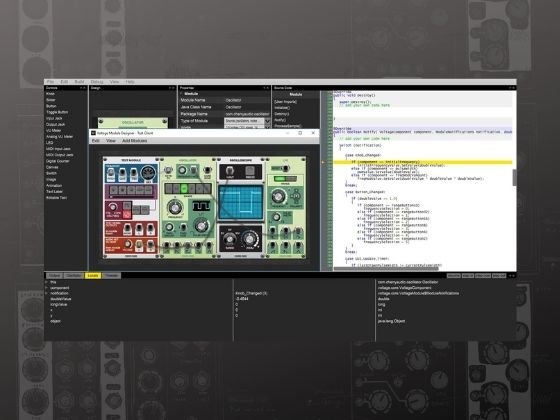

F_DEXZ – Advanced Six Operator FM Synthesizer
F_DEXZ is a six-operator FM synthesizer designed for classic digital FM sounds, modern modular sound design, DX-style patch exploration, and hands-on experimental synthesis. It combines algorithm-based operator routing with editable envelopes, ratio and fixed-frequency operation, operator waveforms, feedback systems, stereo spread, internal LFO modulation, assignable modulation routing, polyphonic voice handling, UNI-style stacking, and DX7 SysEx patch import.
Important: Although F_DEXZ supports DX7 SysEx patch import and follows the classic six-operator FM concept, it is not intended to be a mathematically exact DX7 clone. Imported patches are translated into the DEXZ synthesis engine and may sound different from original Yamaha hardware or dedicated DX emulations.
Differences may occur because of operator scaling, waveform behaviour, feedback response, envelope timing, internal level handling, stereo processing, modulation behaviour, interpolation, and other engine-specific characteristics. Some imported patches may therefore require manual adjustment after import.
The goal of the DX7 import system is practical compatibility and creative reuse of classic FM patch libraries inside a modern modular environment, rather than bit-identical reproduction of the original hardware.
At its core, F_DEXZ follows the classic six-operator FM idea: operators can be arranged as carriers, modulators, or deeper modulation chains. A carrier is heard directly. A modulator changes the frequency or phase behaviour of another operator and therefore changes the tone. This means that in FM synthesis the most important sound-shaping controls are not only volume and pitch, but also operator level, frequency ratio, envelope shape, feedback, and routing.
F_DEXZ is not intended to be a simple preset player. It exposes the structure of FM synthesis so that the sound can be built, edited, animated, and pushed far beyond traditional electric pianos and bells. It can create classic FM keys, basses, metallic percussion, plucked tones, glassy pads, drones, harsh digital textures, stereo motion, evolving harmonic structures, and imported DX-style sounds.
Basic FM Concept
In frequency modulation synthesis, one oscillator can influence another oscillator. The oscillator that is heard directly is called a carrier. The oscillator that modifies another oscillator is called a modulator. When a modulator affects a carrier, new harmonics and sidebands are created. These sidebands give FM synthesis its bright, metallic, glassy, woody, electric, or percussive character.
The relationship between operator frequencies is extremely important. Simple ratios such as 1.00, 2.00, 3.00, or 0.50 usually create harmonic tones that feel stable and musical. More unusual ratios create inharmonic sidebands, which are useful for bells, gongs, struck metal, percussion, noise-like attacks, and experimental sounds.
FM synthesis is very sensitive. A small change in operator level, envelope timing, ratio, or feedback can completely change the sound. This is part of its strength, but it also means that good FM programming usually starts with simple structures and gradually adds complexity.
Operators
F_DEXZ contains six operators. Each operator is an oscillator with its own level, frequency settings, waveform, envelope, feedback behaviour, and on/off state. Depending on the selected algorithm, an operator may be heard directly as a carrier, may only modulate another operator, or may be part of a longer modulation chain.
An operator that is a carrier mainly contributes audible volume. An operator that is a modulator mainly contributes tone, brightness, attack character, metallic detail, or movement. This distinction is essential. Raising the level of a carrier makes the sound louder. Raising the level of a modulator can make the sound brighter, harsher, more complex, or more unstable.
Operators can be switched on or off. Turning off an operator removes it from the sound structure. This is useful for isolating parts of a patch, simplifying an algorithm, checking whether an operator is acting as a carrier or modulator, or building a patch one operator at a time.
Carriers and Modulators
A carrier is an operator that reaches the audio output. If only a carrier is active, it behaves much like a normal oscillator with an envelope. A modulator is an operator that does not necessarily reach the output directly, but instead changes another operator. A modulator can therefore have a large effect even when it is not directly audible by itself.
If a patch is silent, the selected algorithm may not have an active carrier, or the carrier level or envelope may be too low. A modulator alone may not produce sound if it is not routed to the output. When troubleshooting, always first identify which operators are carriers in the selected algorithm.
Algorithms
The algorithm determines how the six operators are connected. Some algorithms use long modulation chains, where one operator modulates another, which modulates another, which finally modulates a carrier. These structures are useful for complex, evolving, metallic, or highly animated sounds.
Other algorithms use several parallel carriers. These are useful for layered sounds, organs, pads, wide harmonic structures, and sounds where several tone components should be heard at the same time. Some algorithms combine parallel carriers with serial modulation chains.
Algorithms with feedback can create sharper attacks, stronger upper harmonics, growling tones, noise-like edges, or unstable digital textures. Feedback is powerful, but it should be handled carefully because small changes can produce large spectral changes.
When reading an algorithm, first look for the operators that reach the output. These are the carriers. Then follow the operators above or connected into them. These are modulators. A good FM programming method is to start with one carrier, then add one modulator, then gradually add more operators only when the sound needs more complexity.
Ratio Mode
In ratio mode, an operator follows the played pitch. A ratio of 1.00 follows the fundamental pitch. A ratio of 2.00 plays one octave above. A ratio of 0.50 plays one octave below. Ratios such as 3.00, 4.00, or 5.00 create harmonic relationships that can still feel stable and musical.
Ratio mode is the normal choice for pitched instruments such as electric pianos, basses, leads, organs, plucks, and pads. When carriers and modulators use simple ratios, the resulting sidebands usually remain connected to the played note.
Fixed Frequency Mode
In fixed frequency mode, an operator uses a fixed frequency in Hz instead of following the played pitch. This is useful for bell tones, metallic hits, noise-like attacks, percussion layers, static modulation, and special effects. A fixed-frequency modulator can create a very different response from a pitch-tracking modulator because its relationship to the played note changes across the keyboard.
Fixed-frequency operators are especially useful as modulators. They can add a constant metallic colour, a fixed buzz, a percussive strike component, or an inharmonic layer. Used carefully, this can make FM sounds less static and more physical. Used heavily, it can quickly become noisy or harsh.
The fixed-frequency controls follow the current DEXZ frequency system, including octave-style fixed frequency ranges. This makes fixed mode useful both for DX-style patch conversion and for direct sound design.
Waveforms
Classic FM synthesis is often based on sine waves, but F_DEXZ allows operators to use different waveforms. A sine wave gives the cleanest and most traditional FM response. It is the best starting point for classic electric pianos, bells, basses, and precise FM programming.
Other waveforms already contain additional harmonics before modulation takes place. This means they can make the result brighter, richer, more aggressive, or more complex. A non-sine modulator can create a much denser spectrum than a sine modulator at the same level.
Use brighter waveforms carefully. They are excellent for aggressive basses, digital leads, harsh textures, and noisy attacks, but they can become too dense very quickly. If a sound becomes uncontrolled, return some operators to sine waveforms and reduce modulator levels.
Operator Level
Operator level is one of the most important controls in FM synthesis. For carriers, level mostly controls loudness. For modulators, level controls modulation depth and therefore timbre. A small increase in modulator level can add brightness. A larger increase can create metallic sidebands, distortion-like behaviour, or noise-like spectra.
When programming FM, do not treat all operator levels like mixer faders. A modulator level is closer to a harmonic intensity control. If the sound is dull, increase the level of a modulator. If the sound is harsh, reduce modulator levels before reducing the final output level.
Operator Envelopes
Each operator has its own envelope. This is one of the most important parts of F_DEXZ. In FM synthesis, envelopes do more than shape volume. Carrier envelopes shape loudness over time. Modulator envelopes shape timbre over time.
A fast modulator envelope can create a bright attack that quickly fades into a softer sustain. This is the basis of many classic FM electric piano and plucked sounds. A slow modulator envelope can make a pad gradually become brighter or more complex. A delayed modulator can make a second harmonic layer appear after the note has already started.
The envelope editor shows the shape of each operator envelope directly. Points can be dragged to change level and timing. Higher points create stronger operator output. Longer horizontal distances create slower transitions. The envelope shape can be used for short percussive transients, sustained tones, evolving pads, delayed movement, and complex layered articulation.
Envelope Delay Block
The envelope editor includes a delay block at the beginning of the envelope. This delay holds the operator back before its envelope starts. This is especially powerful for modulators, because it allows a sound to begin simply and then become more complex later.
A carrier can start immediately while a modulator waits before opening. This can create delayed brightness, late metallic movement, evolving pads, secondary attacks, call-and-response behaviour between operators, or a new layer that appears inside a sustained note.
The delay block is not only for slow sounds. Short delays can create double attacks, delayed clicks, rhythmic articulation, or small transient offsets that make the patch feel more alive.
Envelope Point Editing
Envelope points can be edited visually. Dragging a point changes the timing and level of that stage. This makes envelope editing fast and direct, especially when shaping modulator behaviour by ear.
When precise values are needed, envelope point editing can also be used numerically. This is useful when matching operators, correcting imported patch behaviour, creating exact delay values, or making several operators follow related timing structures.
For best results, edit carriers and modulators differently. Carrier envelopes should usually define the musical volume shape. Modulator envelopes should define brightness, attack detail, metallic movement, or spectral evolution.
Feedback
Feedback sends part of an operator signal back into itself or into a feedback path defined by the algorithm. Small amounts of feedback add brightness, edge, and animation. Larger amounts can create growling tones, distortion-like behaviour, noisy attacks, or unstable spectra.
Feedback is very useful for basses, bells, electric piano bite, metallic percussion, and aggressive digital sounds. It should be adjusted carefully. If a sound becomes too sharp, distorted, or unstable, reduce feedback first, then reduce modulator level if needed.
Global Feedback
In addition to operator feedback behaviour, F_DEXZ includes global feedback control. Global feedback can intensify the overall FM structure and make the selected algorithm feel more animated, aggressive, or unstable.
Global feedback is useful for strong digital basses, metallic impacts, distorted FM leads, experimental drones, and harsh textures. For clean electric pianos or soft pads, use it sparingly.
Polyphony
F_DEXZ is designed as a playable polyphonic FM instrument. Each played note uses its own voice structure so that envelopes, operator phases, and voice behaviour can respond musically to performance.
Polyphonic FM can become dense quickly because every note may contain six active operators, feedback, modulation, and stereo behaviour. If the sound becomes too crowded, reduce operator levels, simplify the algorithm, reduce feedback, or lower stereo spread.
UNI and Poly UNI Behaviour
UNI-style operation stacks voices to create thicker, wider, and more animated sounds. Instead of one plain voice per note, multiple voice layers can be used to create weight, detune, stereo spread, and movement.
UNI is useful for large basses, wide leads, animated pads, and modern digital textures. Poly UNI allows this stacked behaviour to be used polyphonically, creating very large FM sounds. Because FM already creates complex spectra, UNI should be used with attention to level and stereo width.
For bass sounds, keep UNI spread and stereo width controlled. For pads, drones, and cinematic textures, wider UNI settings can make the sound feel much larger and more alive.
Drift and Spread
Drift adds small pitch or behaviour variations between voices or layers. Spread creates stereo width and separation. Together, these controls can make FM sounds feel less static and more organic.
Small amounts of drift are useful for pads, electric keys, and layered sounds. Larger drift values can create chorusing, instability, or experimental movement. Spread is useful for wide textures, but for strong bass sounds it is usually better to keep the stereo image narrower.
LFO System
F_DEXZ includes internal LFO modulation for movement and animation. LFOs can be used for vibrato, tremolo, timbral movement, stereo motion, feedback changes, operator level modulation, and evolving textures.
Smooth LFO shapes are useful for musical movement such as vibrato or slow pad animation. Sharper or stepped shapes can create rhythmic, digital, or sample-and-hold style movement. Sample and Hold behaviour is useful for random stepped modulation, unstable digital textures, and animated experimental patches.
LFO speed and depth should be adjusted carefully when routed to FM parameters. Modulating pitch produces familiar vibrato. Modulating operator level changes the harmonic content. Modulating feedback can create strong spectral movement. Modulating stereo parameters can create motion without changing the core tone too much.
LFO Envelopes and Delayed Modulation
F_DEXZ can use envelope-style behaviour for modulation movement. This allows vibrato, timbral modulation, or stereo movement to appear after the note starts instead of being present immediately.
This is useful for expressive sounds. For example, a note can start clean and then develop vibrato after a short delay. A pad can begin softly and slowly gain harmonic motion. A lead sound can have a stable attack and become animated during the sustain.
Modulation Matrix
F_DEXZ includes assignable modulation routing. Modulation sources can be routed to synthesis targets such as operator level, pitch-related parameters, feedback, stereo behaviour, LFO-related parameters, or other internal controls depending on the available target list.
Each modulation route has a target and an amount. Positive amounts move the target in one direction. Negative amounts invert the modulation. This allows subtle expression, performance control, animated patches, and extreme modular sound design.
External CV modulation is especially powerful in FM, but it should often be used subtly. A small CV change to a modulator level can dramatically change the sound. A small change to feedback can turn a clean patch into an aggressive one. A small change to fixed-frequency modulation can create large timbral shifts.
CV and Modular Use
F_DEXZ is designed for modular workflow. External CV can become part of the FM structure instead of only controlling pitch or volume. Sequencers, envelopes, LFOs, random sources, pressure controllers, and performance tools can all be used to animate the patch.
Because FM responds strongly to modulation, subtle CV amounts are often more useful than extreme modulation. If a patch becomes chaotic too quickly, reduce modulation depth, simplify the algorithm, or use modulation on carrier level and stereo parameters before using it on feedback or deep modulator levels.
Stereo Engine
F_DEXZ includes stereo behaviour for widening, layering, and spatial movement. Stereo spread can make operators, voices, or stacked layers feel wider and more animated. This is especially useful for pads, bells, evolving digital textures, atmospheric sounds, and UNI patches.
For bass sounds, keep the stereo image narrower to preserve weight and focus. For pads and drones, wider settings can create space and movement. For leads, moderate spread can make the sound larger without losing clarity.
DX7 SysEx Import
F_DEXZ can import DX7-style SysEx patch data and translate it into the DEXZ engine. This makes it possible to explore classic FM patch banks inside a modern modular environment.
DX7 import should be understood as patch conversion, not always perfect cloning. The original DX7 has its own operator scaling, envelope behaviour, feedback response, frequency handling, and output character. F_DEXZ translates the important patch information into its own architecture, but some patches may need adjustment after import.
If an imported patch sounds too harsh, reduce modulator levels, reduce feedback, or adjust operator envelopes. If it sounds too dull, increase modulator level or check whether frequency ratios and fixed-frequency settings converted as expected. If the attack feels wrong, inspect the modulator envelopes first, because most of the recognizable DX-style attack character comes from modulator envelope behaviour.
DX7 Compatibility Notes
Classic DX patches often rely on very specific operator level scaling and envelope response. Even small differences in level mapping can make a patch sound too bright, too noisy, too soft, or too clean. This is normal when translating between FM engines.
Fixed-frequency operators are especially important for metallic and percussive DX patches. LFO speed, feedback behaviour, and operator scaling may also need small corrections after import. Treat imported patches as strong starting points that can be edited further inside DEXZ.
Building a Sound
A reliable way to build a patch is to start with one carrier operator. Set its level and envelope so that the basic volume shape works. Then add one modulator. Adjust the modulator ratio, level, and envelope until the attack and brightness feel right.
After that, add more operators only when needed. FM can become complex very quickly. A strong patch often uses fewer operators than expected. The best results usually come from clear relationships between carrier level, modulator level, envelope timing, frequency ratio, and algorithm structure.
When a patch becomes too harsh, do not immediately lower the final output. First reduce modulator levels, feedback, or bright waveforms. When a patch is too dull, increase modulator level, raise a modulator envelope, or try a brighter waveform on one modulator only.
Classic Electric Piano Approach
For electric piano sounds, use a carrier with a natural decay and one or two modulators with quick attacks and shorter decays. The modulator should be strong at the start of the note and then fade back. This creates the familiar bright strike followed by a warmer body.
Start with simple ratios such as 1.00, 2.00, or 3.00. Add a small amount of feedback if more bite is needed. Keep operator levels controlled to avoid harsh peaks. If the sound is too synthetic, use subtle drift or stereo spread.
Bell and Metallic Sounds
For bells, use higher ratios, unusual ratios, or fixed-frequency modulators. Longer decay times help create ringing tones. A carrier can remain simple while modulators create the metallic structure.
Feedback can add brightness and complexity, but too much feedback can turn a bell into noise. Slight detuning, fixed-frequency modulation, and long modulator decays can make bell sounds more realistic and less static.
Pads and Evolving Textures
For pads, use slower envelopes, delayed modulators, stereo spread, and gentle LFO movement. The delay block is especially useful for pads because it allows harmonic layers to appear after the note begins.
Let the carrier start smoothly, then allow one or more modulators to enter later. Use slow LFO modulation on operator levels, spread, or feedback for evolving movement. Keep modulation amounts moderate if the sound should remain musical.
Basses and Leads
For basses and leads, use stronger modulation and tighter envelopes. Short attack times and controlled decay stages help create punch. Feedback can add aggression, but output level and low-frequency stability should be watched carefully.
For bass patches, keep stereo spread narrow and avoid excessive fixed-frequency low modulation unless the effect is intentional. For leads, moderate UNI, drift, and feedback can create strong modern FM tones.
Metallic Percussion
For metallic percussion, use fixed-frequency modulators, high ratios, short carrier envelopes, and fast modulator decays. Feedback can add noise and impact. A delayed or very short modulator envelope can create a click, strike, or metal hit at the start of the sound.
Try building percussion from a simple carrier and one strong modulator first. Then add additional modulators only for extra metallic detail or tail movement.
Using Delay Creatively
The envelope delay block can create delayed attacks, secondary transients, evolving modulation, rhythmic articulation, and call-and-response behaviour between operators.
A carrier can sound immediately while a modulator appears later. Another operator can add a short delayed click or metallic edge. With longer held notes, delayed modulators can make the sound feel alive instead of static.
Advanced Sound Design
Advanced FM programming often comes from controlling contrast. A clean carrier with a short bright modulator creates a pluck. A slow carrier with delayed modulators creates evolving pads. A fixed-frequency modulator with feedback creates metallic or noisy structures. A stacked UNI patch with spread and drift creates wide modern digital textures.
Do not add complexity everywhere at once. Choose where the complexity should happen: attack, sustain, release, stereo field, feedback, or modulation movement. This makes the patch easier to control and more musical.
Troubleshooting
If the sound is silent, check whether at least one carrier operator is active in the selected algorithm. Also check carrier level, carrier envelope level, final output level, and whether the operator is switched on.
If an operator seems to do nothing, it may be a modulator that only affects another operator. Increase the level of the carrier it feeds into, or choose a simpler algorithm to test the operator.
If the sound is too harsh, reduce modulator levels, reduce feedback, use simpler ratios, or switch some operators back to sine waveforms. If the sound is too dull, increase a modulator level, raise its envelope, choose a brighter waveform, or add a small amount of feedback.
If imported DX7 patches sound wrong, inspect operator levels, fixed-frequency settings, feedback, and envelopes. Most conversion differences come from level scaling, envelope timing, feedback response, or fixed-frequency interpretation.
If the sound clips or becomes unstable, reduce operator levels before reducing only the final output. FM overload often starts inside the modulation structure, not only at the final output stage.
Performance Tips
Use simple algorithms for clear, playable sounds. Use complex algorithms for evolving textures, metallic tones, and experimental sounds. Keep bass patches narrower in stereo. Use wider spread for pads, bells, and atmospheric patches.
When using UNI or Poly UNI, watch the level carefully. Stacking voices makes the sound larger, but it also increases spectral density and output energy. Reduce operator levels, feedback, or spread if the patch becomes too heavy or unfocused.
For expressive playing, route modulation to operator levels, feedback, vibrato amount, or stereo spread. These targets often feel more musical than simply modulating final volume.
Summary
F_DEXZ is a deep six-operator FM synthesizer for classic digital tones, DX-style patch exploration, and modern modular sound design. Its strength lies in the combination of algorithm-based FM routing, editable operator envelopes, delayed envelope starts, waveform choice, feedback systems, internal LFO movement, stereo behaviour, UNI stacking, assignable modulation, and DX7 SysEx import.
The most important idea is simple: carriers control what you hear directly, while modulators control how the tone changes. In FM synthesis, envelopes and operator relationships shape timbre as much as pitch and level. By controlling carriers, modulators, ratios, envelopes, feedback, and stereo movement carefully, F_DEXZ can move from clean classic FM to evolving digital landscapes, metallic percussion, expressive keys, animated drones, aggressive basses, and experimental modular textures.
No reviews yet. Be the first to review this product!
F_DEXZ
$29.95 $37.50