






































Janus DCO
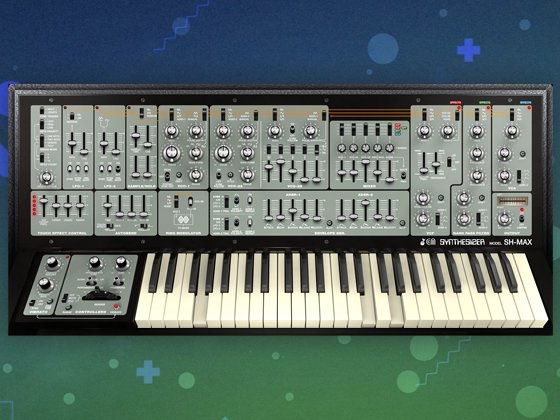
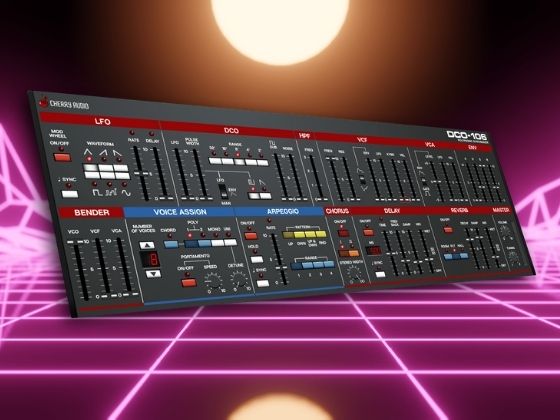
Janus DCO is a sixteen-voice oscillator with one foot in 1984 and the other in the future.
It builds on a steady digital core driving a saw, a pulse, a sub an octave down and a hiss of noise, all mixed on the front panel. To this time-tested formula it adds through-zero linear FM, per-voice phase and pulse width modulation, hard sync, and a CV input on every single control.
Play it straight through a classic chorus for pads that sit beautifully in a mix. Patch in phase modulation for bells and metal. Flip FM to linear and drive the pitch through zero until it comes apart.
Features
- Sixteen-voice polyphonic oscillator core
- Saw, pulse, sub-octave square and noise, mixed on the panel with faders
- Pulse width from 5% to 95%, with poly and mono CV
- Linear (through-zero) or exponential FM, switchable
- Per-voice phase modulation for FM-style bell and metallic tones
- Per-voice hard sync
- Octave, semitone and cent tuning
- CV input on every mixer level
- Free-running voices with spread start phases, for natural unison movement
Manual
TUNE
V/OCT — polyphonic pitch input, one volt per octave. 0 V is middle C. Tracking is exact; there is no trim to set.
OCTAVE (−4 … +4) · SEMITONE (−12 … +12) · CENTS (−100 … +100) — three tuning knobs, coarse to fine, that simply add together. Octave and semitone click to whole steps, so you can transpose by ear without landing between notes. Cents is continuous — use it to detune a second Janus DCO against this one for thickness.
MODULATION
Every amount knob (AMT) works the same way: centre is off, turning right applies the modulation, turning left applies it inverted. Each section has two CV inputs that add together before the AMT knob sees them:
- POLY CV (aqua ring) — a separate value per voice, for per-note modulation.
- CV (plain) — one value sent to every voice alike.
Patch either, or both.
PULSE WIDTH
WIDTH sets the pulse's duty cycle by hand. Centre is a square wave — hollow and clarinet-like. Turning either way thins the pulse toward a bright, nasal buzz. The extremes are 5% and 95%, which sound identical to each other; the range is symmetric so that modulation has room to move in both directions.
AMT with a slow LFO into a CV input is the classic string-pad shimmer. A narrow pulse is quieter than a square — that level change is real and is part of how a width sweep is heard.
Width affects the pulse only. The sub-octave square is unaffected.
FREQ MOD
FM MODE switches between two characters:
- EXP (down) — exponential. Modulation is in octaves; full CV gives one octave of swing. This is your vibrato and pitch-envelope setting, and the musical default.
- LIN (up) — linear, and through zero. Modulation scales the frequency rather than the pitch, and at full depth it drags the frequency down past zero and out the other side, running the waveform backwards. Sweeps here are wilder and less predictable than EXP, which is the reason to use it.
AMT sets the depth. Its response is weighted toward the bottom of the travel, so gentle vibrato is a comfortable amount of knob rather than a sliver just off centre.
This input is built for LFOs, envelopes and pitch bends. For audio-rate modulation, use PHASE MOD instead — it is the better tool for that job and sounds cleaner doing it.
PHASE MOD / SYNC
AMT and POLY CV give per-voice phase modulation, up to a full cycle of swing at maximum. Patch another oscillator in here and you get FM-style tones: bells, mallets, metallic and glassy timbres. Unlike the FM section, this tracks audio-rate input properly, so it stays clean and musical as the modulator climbs into the audio range. Try a second Janus DCO an octave or a fifth up as the modulator, with an envelope on the AMT-side CV.
SYNC is per-voice hard sync. Every time the incoming signal rises through zero, that voice's waveform restarts. Patch a second oscillator here, then sweep this module's tuning — the classic tearing, formant-shifting sync lead. Because the jack is polyphonic, each voice can be synced to its own source.
MIX
Four faders, one per sound source, 0 to 10. They sum into the output. Above each fader is a CV input: patch an envelope or LFO and it adds to wherever you have left the fader. Full CV covers the fader's whole travel, so there is no attenuator to set — put the fader down and let the CV bring the source in.
| Source | Notes | |
|---|---|---|
| 1 | Sawtooth | Bright and full. The workhorse — strings, brass, basses. |
| 2 | Pulse | Shaped by the PULSE WIDTH section. Hollow at square, reedy when narrow. |
| 3 | Sub | A square one octave down, locked to the saw. Adds weight without muddying pitch. |
| 4 | Noise | Hiss, for breath on pads and for percussion. |
MIX OUT is the polyphonic output. Each source peaks around ±5 V on its own, so running all four faders up can reach roughly ±15 V. Running hot into a saturating filter may give pleasing results; otherwise, bring the faders down to tame the output level.
Notes on the sound
Voices do not start together. Each one comes up at its own point in its cycle, so two voices playing the same note beat gently against one another instead of locking into a single flat tone. This is deliberate, it is a large part of the character, and it is why unison and doubled parts sound alive without any detuning.
A fast pulse-width sweep may thump slightly. The output models an analogue coupling capacitor, and a rapid duty-cycle change pushes a little movement through it. The hardware did this too.
Low notes are slightly softer and gently tilted; high notes are not. Same cause. It is most audible on the sub below about 40 Hz.
Three starting points
Vintage pad. Saw at 10, sub at 4, pulse at 3 with WIDTH just off centre. Slow LFO into PWM CV, AMT about a third up. Play chords.
Sync lead. A second oscillator into SYNC, saw fader up, everything else down. Envelope into this module's pitch, or just sweep SEMITONE by hand.
Bell. Pulse and saw down, sub up. A second oscillator a fifth above into PHASE MOD POLY CV, with a fast decay envelope controlling its level. Raise AMT until it turns metallic.
No reviews yet. Be the first to review this product!
Title of Song
-
DCO-Mussorgsky
Janus DCO
$10.00